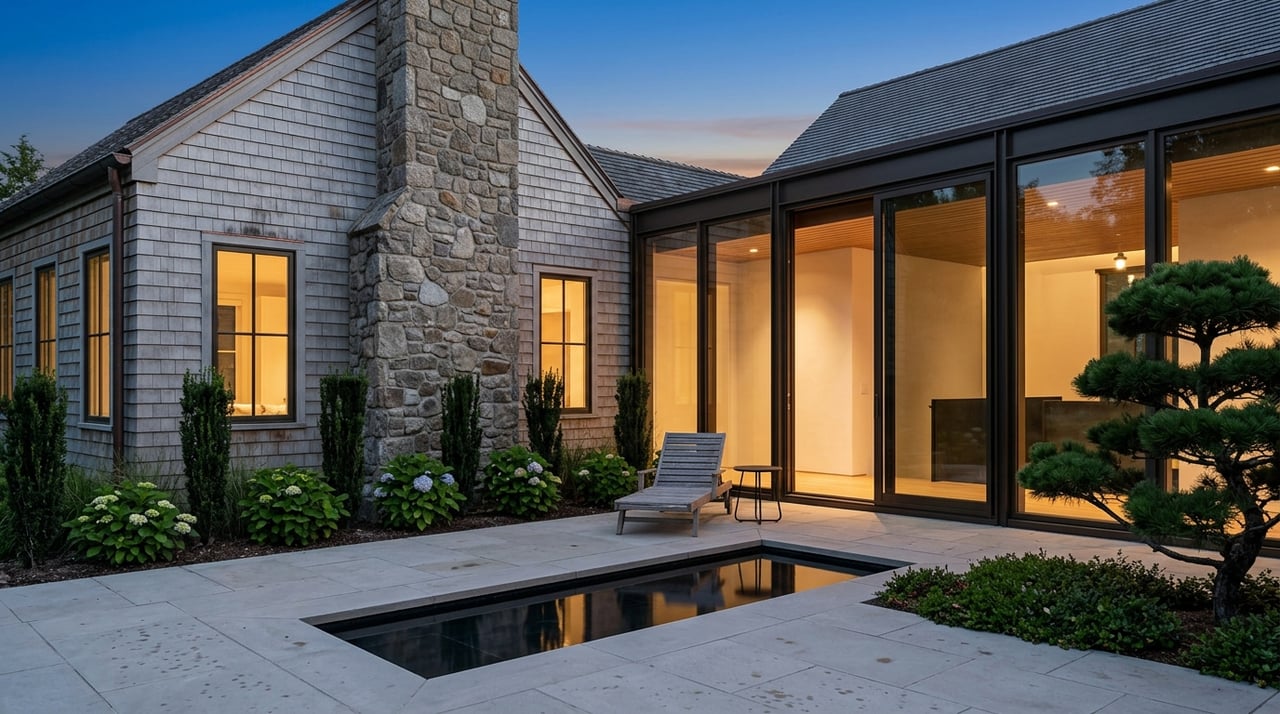
If you are choosing between a brand-new home and an older property in Bridgehampton, the price tag is only part of the story. In a small, high-value market like this one, your real decision often comes down to timing, condition, design, and how much uncertainty you are willing to manage. This guide will help you compare new construction and resale homes in Bridgehampton so you can move forward with more clarity and confidence. Let’s dive in.
Bridgehampton market context
Bridgehampton is a hamlet within the Town of Southampton, and local development is shaped in part by town review, including the adopted Bridgehampton Hamlet Center Plan and ongoing site-plan and subdivision activity. That matters because housing supply is not driven by demand alone. The path to create or significantly change a home can be longer and more regulated than many buyers expect.
Recent market snapshots also show how nuanced this market can be. Realtor.com described Bridgehampton as a buyer's market in March 2026, with 62 homes for sale, a 97% sale-to-list ratio, and 176 median days on market. Other trackers showed different inventory and pricing figures, including a $3.53 million median sale price reported by Redfin for the three months ending April 2026 and a $4.60 million average home value reported by Zillow as of April 30, 2026.
Those numbers can move quickly because Bridgehampton is a low-sample luxury market. Some reports also combine Bridgehampton with nearby areas like Water Mill and Sagaponack, which can change the picture further. For you as a buyer, that means broad averages are useful, but property-level details matter even more.
Why new construction appeals to buyers
New construction often attracts buyers who want control, customization, and newer systems. In Bridgehampton, that can mean a cleaner design process, fewer immediate repair concerns, and a home built to current standards. For many buyers, the appeal is simple: less guesswork at move-in.
New York's Uniform Code sets minimum statewide construction standards, and the State Energy Code requires energy-conservation measures that are considered economically reasonable. Southampton also requires building permits for construction, additions, alterations, demolition, and changes of use. Before a single-family home can move forward, Suffolk County requires approval for sewage and water supply plans, which adds another layer of review.
Because of that approval process, new homes are often delivered with current code compliance and newer mechanical systems. That can support lower near-term maintenance expectations, although actual costs still depend on the home's design, materials, and how you use it. Energy performance may also be easier to plan around in a newer home because the design starts under current standards.
Customization and modern living
If you want open layouts, contemporary finishes, larger glass exposures, or current indoor-outdoor design, new construction may be the better fit. Bridgehampton includes both modern homes and traditional shingled estates, so “new” does not always mean one style. In practice, you may be choosing between a recently built modern home and an older property with more established character.
That design flexibility can be especially valuable if you plan to use the home seasonally and want something more turnkey. A new home may reduce the number of projects waiting for you after closing. For buyers with limited time to oversee renovations, that convenience can carry real value.
New construction can command a premium
In Bridgehampton, high-quality new construction often trades at a premium, especially in strong locations. Local market commentary notes that new construction has been a major driver of appreciation and places high-quality new homes roughly in the $7 million to $12 million range, with oceanfront properties higher. This is market commentary rather than an official valuation series, but it aligns with how buyers tend to price convenience, design, and prime location.
That premium is not only about the house itself. In Bridgehampton, lot position, privacy, and proximity to the ocean can outweigh almost everything else. A well-located new home may command strong pricing because it combines modern product with scarce land.
The timeline is usually longer
The biggest drawback with new construction is time. Planning review, wastewater approvals, inspections, and final occupancy sign-off can make the buying timeline longer and less predictable than a standard resale purchase. Even when the home is nearly complete, timing can still depend on final approvals.
If you need immediate use, that uncertainty matters. If your schedule is flexible and you care more about finished quality and future condition, the longer runway may be worth it. The right choice depends on how you balance control against speed.
Why resale homes appeal to buyers
Resale homes are often the better fit when you want certainty, faster occupancy, and a chance to inspect a finished property before closing. In Bridgehampton, resale also gives you access to more of the hamlet’s architectural variety. That can include classic village estates, established homesites, and properties shaped by mature landscaping rather than recent construction.
For many buyers, resale offers a more immediate understanding of what they are getting. You can walk the property, assess light and layout, and evaluate how the home sits on the land. In a place where site quality and setting matter so much, that can be a major advantage.
Character and established surroundings
Bridgehampton's appeal is not limited to newly built homes. Local commentary points to the continuing value of land, privacy, and architectural pedigree. That makes resale especially compelling if you want an established property with a sense of place.
Mature landscaping is another meaningful advantage. Trees, screening, and outdoor layout often take years to develop. If you value a home that feels settled from day one, resale may deliver that more easily than a newly completed property.
Faster use, with more diligence required
Resale homes usually close faster than new construction because they do not have to move through the same build and approval sequence. That can make resale attractive if you want to use the property soon or avoid a long waiting period. In a seasonal market, timing can be especially important.
The tradeoff is condition risk. New York's Property Condition Disclosure Statement asks sellers about issues such as floodplain location, flood insurance, prior flood damage, septic or cesspool type, roof age, and structural defects. That disclosure helps, but it does not replace careful due diligence.
New York also requires licensed home inspectors for compensated inspections of residential buildings. A professional inspection can give you a written view of the home's systems and components, which is especially useful in coastal markets. For older homes, the inspection period is where many of the most important decisions get made.
Wastewater and coastal condition matter
In Bridgehampton, wastewater is a major resale issue to review carefully. Suffolk County regulates both new installs and replacements, and Southampton expanded water-quality grant eligibility in March 2026 for innovative and alternative sanitary-system funding. Suffolk County also says it offers incentives of up to $30,000 for homeowners replacing existing systems with advanced treatment systems.
That does not mean every resale home needs a system upgrade, but it does mean wastewater status should be verified early. Septic or cesspool type, age, performance, and compliance can all affect your costs and timeline after closing. On the East End, this is not a minor detail.
Flood exposure also deserves close attention. New York's disclosure form tells buyers to check FEMA flood maps, wetland records, tax records, and elevation certificates. Coastal homes can also present concerns related to drainage, roof condition, foundation issues, siding, mold, and water intrusion.
New construction vs resale at a glance
For most buyers, the choice comes down to one core question: do you want more control over the product, or more certainty about the property you are buying? Both paths can work well in Bridgehampton. The right answer depends on your timeline, risk tolerance, design priorities, and budget for future improvements.
| Factor | New Construction | Resale Home |
|---|---|---|
| Timeline | Usually longer and more variable | Usually faster |
| Condition | New systems and current code standards | Depends on age, upkeep, and inspection findings |
| Design | Often more modern and turnkey | Often more character and established setting |
| Maintenance | Typically lower near-term expectations | May require repairs or upgrades sooner |
| Pricing | Premiums common in top locations | May be lower upfront, but updates can add cost |
| Tax impact | Finished improvements may increase assessed value | Assessed value still depends on property value and improvements |
How to decide in Bridgehampton
If you value customization, current standards, and fewer immediate projects, new construction may be the better match. If you value speed, established landscaping, and architectural character, resale may offer more of what you want. In Bridgehampton, neither option is automatically better. The property’s exact location, flood exposure, and site quality often matter more than age alone.
A practical approach is to compare not just asking price, but total ownership picture. That includes likely carrying costs, inspection findings, wastewater needs, and the time required before you can fully use the home. In a high-priced market with small sample sizes, this kind of disciplined comparison is often where smart decisions are made.
A smart buyer checklist
Before you choose between a new construction home and a resale home in Bridgehampton, make sure you review the fundamentals carefully:
- Verify the FEMA flood zone and ask whether an elevation certificate is available
- Confirm septic or wastewater system status and whether upgrades may be needed
- Review the property-condition disclosure in detail for a resale purchase
- Check the assessment roll and understand how assessed value affects property taxes
- Ask about permits, approvals, inspections, and occupancy status for new construction
- Compare the value of immediate use versus future customization
A measured process matters here. In a market where just a few sales can shift the reported median, broad headlines should never replace property-specific review.
If you want a clear, confidential read on which path makes more sense for your goals in Bridgehampton, Dennis Saglam can help you evaluate the tradeoffs, identify the right opportunities, and move with confidence.
FAQs
Is new construction usually more expensive in Bridgehampton?
- Often, yes. High-quality new construction in strong locations can command a significant premium, especially near the ocean or on large sites.
Do resale homes close faster than new construction in Bridgehampton?
- Usually, yes. Resale homes tend to close faster because new construction often involves permit steps, wastewater approvals, inspections, and occupancy sign-off.
What should you inspect most carefully in a Bridgehampton resale home?
- Focus closely on flood history, drainage, roof age, structural issues, septic or wastewater system status, and signs of water intrusion.
How should you think about property taxes for new construction versus resale?
- In New York, property taxes are tied to assessed value, not age alone. A newly completed home may carry a higher tax base once the finished improvement is assessed.
Is resale always the better value in Bridgehampton?
- Not necessarily. A resale home may cost less upfront, but deferred maintenance, system upgrades, or condition issues can change the total cost picture.
What matters most when comparing homes in Bridgehampton?
- In many cases, lot position, flood exposure, privacy, and site quality matter more than whether the home is new or older.
