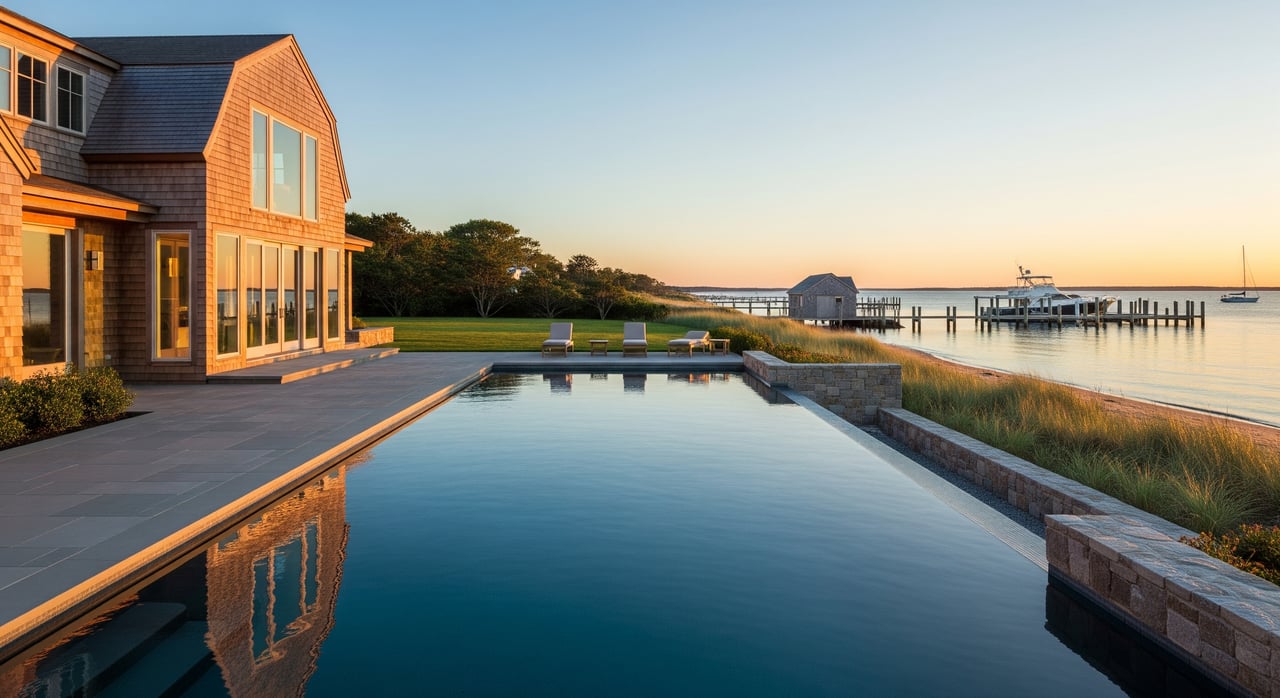
What is your waterfront in Water Mill really worth today? If you own on the ocean, bay, or a tidal creek, you know no two shorelines are alike. You want a price that reflects your view, your frontage, your permits, and your risk profile, not just a generic number. In this guide, you’ll learn how serious buyers evaluate value in Water Mill, what to document before you list, and a clear method to set a confident asking price. Let’s dive in.
Water Mill waterfront basics
Water Mill sits within the Town of Southampton, part of the Hamptons luxury market. Waterfront here spans true Atlantic oceanfront, bay and harbor frontage, tidal creeks and lagoons, and inland ponds and streams. Inventory is scarce for prime oceanfront, and many parcels are unique, which is why pricing requires careful context rather than simple averages.
Buyer motivations vary. Some want a seasonal retreat, others a primary residence, and some focus on rental income. That mix shapes price sensitivity, timelines, and financing options. Understanding who your most likely buyer is helps you position the property and the price correctly.
What drives value most
Frontage and access
The amount and quality of water frontage matter. Linear feet, private versus shared beach, and ease of access to the shore or boat launch all influence price. Private, direct access typically commands a premium.
Waterbody type and exposure
Open ocean exposure offers drama and scarcity, while bays and harbors provide calmer waters and different recreational appeal. Tidal influence and protection from prevailing winds affect usability and perceived risk, which buyers price in.
Orientation and view
Unobstructed, direct water views usually outperform partial or oblique views. Orientation that maximizes sunrise or sunset sightlines can add appeal. Seasonal changes in foliage and light can also affect perceived view quality.
Upland area and setbacks
Usable land above the dune or shoreline setback usually carries more value than intertidal or marsh area. The more functional yard or buildable area you have within local rules, the stronger the pricing case.
Waterfront improvements
Docks, bulkheads or seawalls, beach stairs, moorings, and dredging history all impact utility and value. Permitted, well‑maintained improvements reduce buyer uncertainty and tend to support higher prices.
Structure elevation and condition
Elevation relative to the Base Flood Elevation, age and condition, and any storm damage history influence both marketability and insurance costs. Elevated structures with proper flood openings are often easier to finance and insure.
Septic and utilities
Suffolk County septic regulations can limit occupancy and expansion, particularly on sensitive waterfront lots. A compliant, well‑documented system is a plus, while an undersized or failing system can drag on price.
Legal rights and permits
Deeded beach access, littoral or riparian rights, association rules, public access easements, and any private restrictions affect how the property can be used. Valid, current permits for docks, bulkheads, and shoreline work are valuable. Unpermitted structures are a red flag for many buyers.
Risks that trigger discounts
Flood zones and FEMA factors
FEMA Flood Insurance Rate Maps and the property’s Base Flood Elevation influence lender requirements and premiums. Many buyers reduce offers for higher‑risk zones, especially where elevation would be costly to change.
Erosion and sea‑level considerations
Recent storm patterns and long‑term sea‑level rise concerns weigh on buyer confidence for at‑risk parcels. Dunes, vegetative buffers, and well‑planned shoreline protection can mitigate some risk and help preserve value.
Bulkhead and shoreline condition
Aging or failing bulkheads or seawalls reduce value and can complicate sales. Lack of vehicular access to the shore or a history of emergency repairs without permits also push pricing lower.
Insurance availability and cost
Flood and wind coverage drive carrying costs and buyer budgets. Some carriers tighten coastal underwriting after large storms, so current quotes and claim histories are pivotal to buyer diligence and negotiation.
Access and privacy limitations
Limited or no private beach access, or a public beach between the house and the water, can reduce privacy and value. Buyers pay close attention to easements and shared rights.
How pros value waterfront
Sales comparison approach
This is the primary method for Water Mill waterfront. You match your property to recent sales with similar waterbody type and exposure, then adjust for frontage, view, elevation, improvements, usable upland, and permits. Because every shoreline is different, the adjustments need to be specific and well documented.
Cost approach for unique builds
When comparable sales are too scarce, estimating replacement cost less depreciation can help frame value, particularly for newer construction on singular lots. This supports a pricing range rather than a single figure.
Income approach for rentals
If seasonal rental income is a realistic use, income and expenses can inform value. Allowances for vacancy, management, utilities, insurance, and maintenance should be realistic for coastal assets.
Per‑front‑foot with care
Analysts sometimes look at sale price per front foot. In luxury waterfront, this is only a rough lens. It ignores exposure, upland usability, engineering, and permit quality, so it should never be the only metric.
A step‑by‑step pricing framework
- Gather parcel facts
- Address, parcel ID, deed description, and recorded frontage measurement.
- Waterbody type and tidal range, including any dredging or channel history.
- Flood zone and Base Flood Elevation, plus any elevation certificate.
- House age, condition, square footage, bedroom and bathroom count, and major systems.
- Verify permits and compliance
- NYS DEC tidal wetlands or coastal permits as applicable.
- U.S. Army Corps approval for any work below mean high water.
- Town of Southampton building and planning approvals, variances, and certificate of occupancy.
- Suffolk County septic permits and status.
- Document shoreline and improvements
- Bulkhead or seawall age and condition, dock specs, beach access paths or stairs, mooring rights.
- Maintenance records and any recent repairs with permits.
- Build a comp set
- Start with sales on the same waterbody and similar exposure.
- Where limited, supplement with nearby non‑waterfront or different waterbody sales, then apply careful adjustments for frontage, view, elevation, usable upland, and improvements.
- Note time on market and season of sale since seasonality affects demand.
- Model a pricing range
- Anchor the high end with the most similar recent sale adjusted to your property.
- Anchor the conservative end with a less comparable benchmark adjusted for access and utility.
- Present the range with your adjustment logic so buyers and appraisers can follow the reasoning.
- Time your launch
- Spring and summer typically bring peak search and showing activity, which can support a stronger ask.
- In higher price bands, private previews and off‑market conversations are common, so plan for both public and discreet exposure.
- Prepare buyer diligence upfront
- Share elevation certificates, flood zone letters, insurance quotes, permit history, and maintenance records.
- Transparency shortens timelines and can protect your price from last‑minute retrades.
- Execute premium marketing
- Professional aerial and shoreline photography to show frontage, access, and view corridors.
- Clear, consistent listing copy that explains permits, systems, and risk mitigations.
- Targeted outreach to out‑of‑market luxury buyers and coastal‑experienced brokers.
Pricing nuances by shoreline type
Atlantic oceanfront
True oceanfront is scarce and highly variable by dune system, setback, and erosion exposure. Expect wider variance in sale price per front foot, with elevation, shoreline protection, and dune health carrying outsized weight.
Bay and harbor frontage
Calmer waters and boating utility drive demand. Docks and mooring rights, channel depth, and protection from wind are key. Usable upland and permitted shoreline structures often separate top‑tier sales from the pack.
Tidal creeks, lagoons, and ponds
Serene settings and wildlife views attract buyers, but tidal wetlands and access limitations can restrict use. Confirm wetlands boundaries, setbacks, and septic constraints early to set realistic expectations.
Avoid these common pitfalls
- Relying on a single per‑front‑foot metric without adjusting for exposure, elevation, and upland usability.
- Using distant or different‑waterbody comps without clear, line‑item adjustments.
- Ignoring trends in insurance availability and premiums that buyers price in.
- Failing to verify permits or claims history, which can derail underwriting and closings.
- Under‑disclosing easements or access limits that materially change waterfront use.
What to compile before you list
- Deed, survey, and recorded frontage details.
- Flood zone, Base Flood Elevation, and any elevation certificate.
- Permit files for docks, bulkheads, stairs, dredging, and shoreline work.
- Suffolk County septic permits, system specs, and service records.
- Insurance declarations, current premiums, and any claim history.
- Maintenance records for shoreline structures and recent renovations.
How we help you price and sell
You get a disciplined process that blends local knowledge with coastal diligence. We gather the right data, select the right comps, and present a clear pricing range supported by adjustments that appraisers can follow. Then we pair that with high‑caliber visuals and targeted exposure that reaches the buyers most likely to appreciate your frontage, view, and permits.
If you want a discreet, data‑backed price opinion and a launch plan built for the Hamptons luxury market, connect with Dennis Saglam.
FAQs
What makes pricing Water Mill waterfront different?
- Scarcity of truly comparable shoreline parcels, multiple waterbody types, and coastal regulations require a value range supported by detailed adjustments rather than a single number.
How do FEMA flood zones affect my sale price?
- Flood zones and Base Flood Elevation influence insurance costs and lender terms, so buyers often discount higher‑risk parcels unless elevation and mitigation reduce perceived risk.
Can I add or rebuild a dock or bulkhead in Southampton?
- You will likely need permits from NYS DEC, the U.S. Army Corps for work below mean high water, and Town of Southampton approvals, and permitted structures generally support higher value.
How do insurance costs shape buyer offers on coastal homes?
- Flood and wind premiums affect total ownership cost and financing, so current quotes and claim history are central to buyer underwriting and can move offers up or down.
What documents should I prepare before listing a waterfront property?
- Assemble surveys, permits, flood and elevation documents, septic records, insurance details, and maintenance logs to reduce friction and protect your asking price.
How does seasonality in the Hamptons influence pricing?
- Spring and summer bring peak buyer activity, so launching then can improve showings and support a stronger initial ask, especially at higher price points.
What if there are no good comps for my shoreline?
- Use the closest similar sale as a high anchor, a conservative benchmark as a low anchor, and support both with clear adjustments, cost context, and documented risk mitigations.
