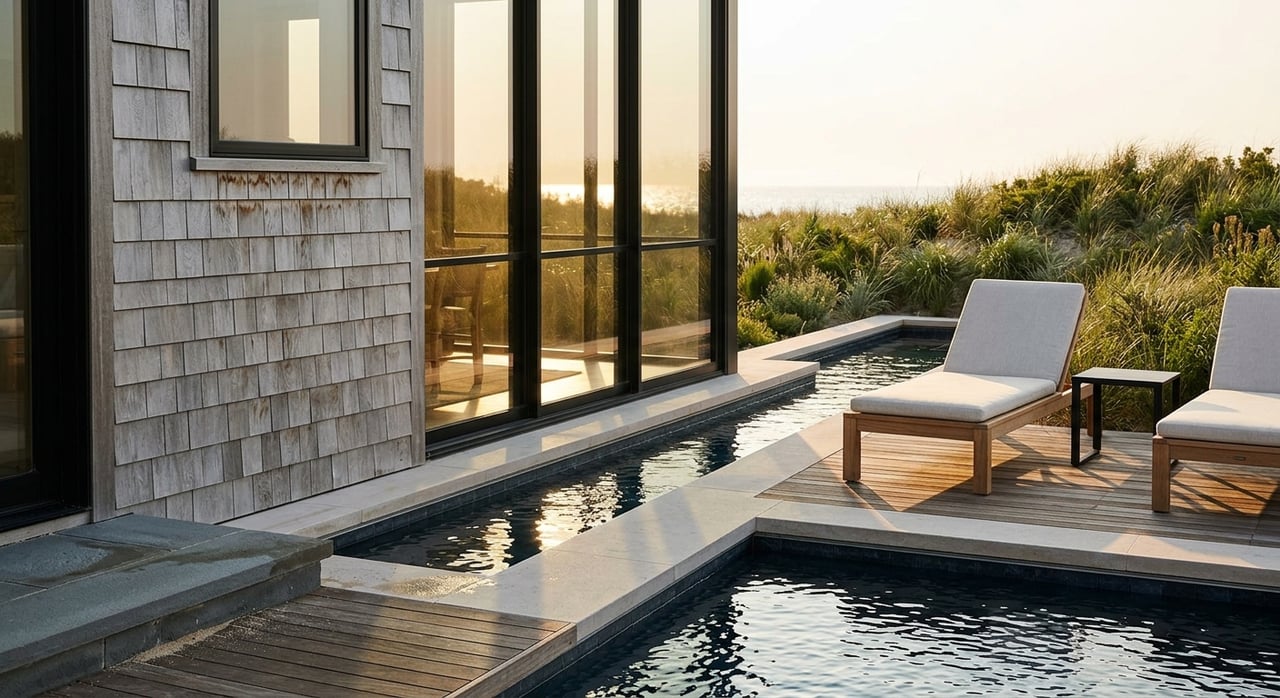
If you are watching Sagaponack’s oceanfront market from the sidelines, the first thing to know is simple: this is one of the tightest and most exacting luxury markets on the South Fork. Inventory is limited, pricing is highly sensitive to land quality, and the details that move value often sit below the surface. If you are buying, selling, or simply trying to understand what makes this stretch of coastline so rare, this guide will help you see the market more clearly. Let’s dive in.
Why Sagaponack Feels So Scarce
Sagaponack Village is a small incorporated village on the east end of Southampton Town, located between Bridgehampton and Wainscott. According to the Village of Sagaponack, it spans 4.56 square miles and has roughly 350 year-round residents, with more than 1,000 part-time residents.
That small footprint matters. In Douglas Elliman and Miller Samuel’s Q4 2025 reporting, Sagaponack posted a $9.5 million median sales price, with 9 closed sales, 19 listings, and 6.3 months of supply. For context, the broader Hamptons market posted a $2.3375 million median sales price, while the luxury entry threshold was $7.375 million, placing Sagaponack firmly above the wider market even before an oceanfront premium is added.
What makes the oceanfront segment even tighter is geography. Publicly visible oceanfront and ocean-adjacent opportunities tend to cluster along a short list of streets, including Potato Road, Seascape Lane, Sandune Court, Crestview Lane, and Daniels Lane. A listing such as 719 Daniels Lane highlights just how limited that inventory can be, describing a private approach that serves only seven oceanfront homes.
Oceanfront Value Starts With the Land
In Sagaponack, buyers are not just purchasing a house. More often, they are evaluating a combination of acreage, frontage, siting, access, and future flexibility. That is why this market is often better understood as a land story first and a home story second.
A strong example is 35 Potato Road, which sold for $46.5 million in May 2022. The property was described as a 3.8-acre oceanfront compound made up of two parcels, with nearly 2 oceanfront acres, about 250 feet of direct ocean frontage, and an above-flood-zone position. Those traits help explain why certain Sagaponack properties command such a significant premium.
By comparison, 124 Seascape Lane was listed at $16.995 million in December 2024 and later removed in February 2026. It offered 1 acre of waterfront land and 5,225 square feet, and the listing emphasized oceanfront positioning, views of Sagg Main Beach, and protected wetlands. That tells you something important about this market: interior size matters, but it is often secondary to the quality and usability of the site.
Zoning Can Change the Equation
In a market this expensive, many buyers and sellers naturally focus on design, views, and finish level. But in Sagaponack, zoning and buildability can influence value just as much as architecture.
Village zoning documents show how specific those rules can be. A 2024 public notice for 151 Seascape Lane cited R-120 zoning, an 80-foot front-yard setback, and a rule prohibiting off-street parking in the required front yard. A 2022 zoning board decision on another R-120 property also referenced an 80-foot front setback and a 50% lot-coverage cap.
For buyers, that means a property’s true value may depend on what you can legally expand, reconfigure, or add over time. For sellers, it means pricing should account for more than the existing residence. The development envelope, setback constraints, and lot coverage rules may materially affect how the next owner views the opportunity.
Features Buyers Watch Closely
Across Sagaponack’s oceanfront belt, listings often emphasize physical and engineering details that support long-term enjoyment and resilience. These details can shape pricing and buyer interest more than you might expect.
Common value drivers include:
- Direct ocean frontage
- Length of beach frontage
- Acreage and parcel configuration
- Private beach paths or beach access
- Above-flood-zone positioning
- Bulkheads or shoreline protection features
- Potential for lower-level space
- Room for outdoor amenities such as pools or other compound-scale features
Listings like 719 Daniels Lane underscore this point. The market consistently rewards properties that combine strong waterfront positioning with practical buildability and site planning.
Public Pricing Shows a Wide Premium
Publicly available examples suggest that Sagaponack’s oceanfront and near-ocean inventory trades in a very different pricing band than the rest of the village. Based on the examples in the research, a workable public range runs from the high teens to the mid-$40 millions.
Here is a simple snapshot:
| Property | Public Price Point | Key Site Traits |
|---|---|---|
| 124 Seascape Lane | $16.995M list | 1 acre waterfront setting |
| 25 Potato Road | $20.5M sale | 1.03 acres |
| 155 Seascape Lane | $24.925M sale | 1.09 acres |
| 35 Potato Road | $46.5M sale | 3.8 acres, about 250 ft frontage |
The pattern is fairly clear. Acre count, frontage length, and direct beach access can matter as much as, or more than, interior square footage.
For contrast, 118 Sagaponack Court sold for $4.185 million in January 2024 on 1.18 acres with about 1,700 square feet. While properties differ in many ways, the gap between that sale and the oceanfront examples above shows how substantial the waterfront premium can become in Sagaponack.
How Sagaponack Compares Nearby
Sagaponack does not sit in a vacuum. Buyers considering this market often compare it with East Hampton Village, Southampton Village, and other stretches of South Fork coastline.
East Hampton Village remains in the same ultra-luxury conversation. Public examples include 33 Lily Pond Lane, which sold for $31.5 million on 1.76 acres with 171 feet of private ocean frontage. That places East Hampton’s top oceanfront segment in direct competition with Sagaponack.
Southampton Village can also meet or exceed Sagaponack pricing when the parcel is large enough. A public example is 586 Old Town Road, which was listed at $60 million and later $49.995 million, with 4 acres, more than 200 feet of ocean frontage, and deeded beach access.
Further west, some Dune Road markets trade at a lower tier. For example, 47 Dune Road in East Quogue sold for $9.85 million on 1.61 acres with 112 feet of ocean frontage. That comparison helps frame Sagaponack more accurately: it belongs in the top oceanfront tier, but values are driven by exact parcel quality and constraints, not just the address alone.
What Buyers Should Focus On
If you are considering an oceanfront purchase in Sagaponack, it helps to look past the headline number and study the land with discipline. Two homes with similar asking prices can offer very different long-term value depending on frontage, flood-zone position, lot shape, and redevelopment flexibility.
A practical buyer review should include:
- Parcel size and dimensions
- Approximate frontage depth and beach access
- Flood-zone positioning
- Setback and lot-coverage constraints
- Existing improvements versus future potential
- Site support for outdoor living and compound-scale use
In this segment, careful diligence is not optional. It is often the difference between buying a beautiful house and buying a truly rare asset.
What Sellers Should Understand
If you own oceanfront or near-ocean property in Sagaponack, your pricing strategy should reflect more than finishes and recent cosmetic updates. Sophisticated buyers are studying land value, legal use, engineering details, and scarcity.
That is why positioning matters. A well-run sale process should clearly communicate the parcel’s strengths, whether that means frontage, above-flood-zone siting, beach path access, or development flexibility within current zoning. In an inventory-constrained market, the right narrative can help buyers understand why one property deserves to trade differently from another a few streets away.
The Real Story of Sagaponack Oceanfront
The cleanest way to understand Sagaponack’s exclusive oceanfront market is this: it is a scarcity-driven land market with homes attached. The best opportunities tend to command a premium because they combine a rare address with direct beach frontage, meaningful acreage, and a site that supports long-term use and future planning.
If you are buying or selling in this segment, broad Hamptons averages will only take you so far. The real work happens at the parcel level, where frontage, zoning, flood-zone exposure, and buildability all come into focus. If you want discreet, fact-driven guidance on how a specific property fits into this market, Dennis Saglam can help you evaluate the opportunity with clarity and confidence.
FAQs
What makes Sagaponack oceanfront real estate so expensive?
- Public examples suggest pricing is driven by scarcity, direct beach frontage, acreage, parcel quality, zoning flexibility, and flood-zone positioning, not just the size of the house.
How limited is Sagaponack oceanfront inventory?
- Publicly visible oceanfront and ocean-adjacent listings appear concentrated on only a handful of streets, including Potato, Seascape, Sandune, Crestview, and Daniels, which helps explain why supply feels thin.
How does Sagaponack compare to East Hampton oceanfront?
- Public sales indicate Sagaponack competes directly with East Hampton Village in the ultra-luxury oceanfront segment, with both markets showing transactions in the eight-figure range.
What zoning issues matter in Sagaponack oceanfront purchases?
- Village documents show that setbacks, lot-coverage limits, and parking rules can materially affect what can be built or changed on a property.
Is Sagaponack mainly a home market or a land market?
- Based on the public examples in this analysis, Sagaponack is best understood as a land-driven market first, where frontage, acreage, and buildability strongly influence value.
What should sellers highlight when marketing a Sagaponack oceanfront property?
- Sellers should clearly present the property’s land value drivers, including beach frontage, access, siting, engineering features, and any redevelopment advantages supported by zoning and parcel layout.
