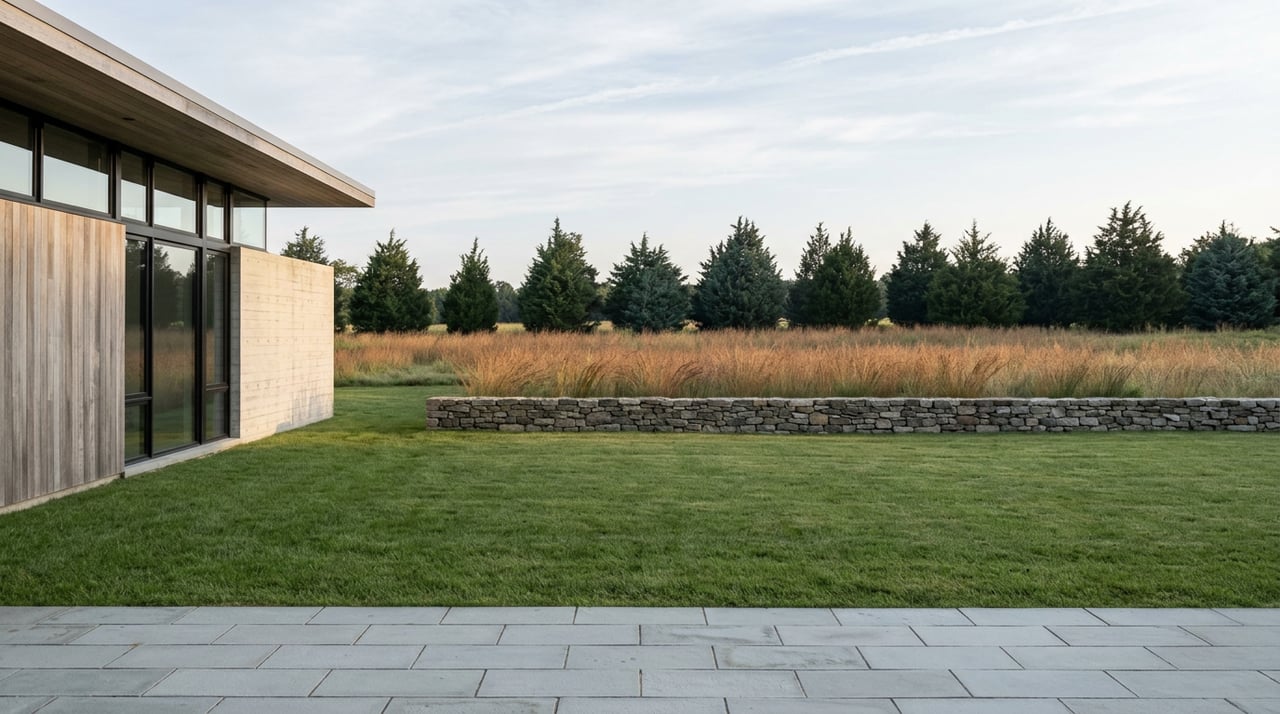
As Behind the Hedges reported, in December 2023, a Southampton Town Board hearing on 27 acres of Bridgehampton farmland ran nearly six hours. Speaker after speaker rose, said essentially the same thing, and sat back down. Supervisor Jay Schneiderman eventually told the room that a simple "ditto" would suffice if they agreed with what had already been said. People kept standing up anyway.
What they were agreeing to was a $48 million purchase of the Topping family's land on Halsey Lane, structured so the Peconic Land Trust would buy the property outright while Southampton Town spent $30 million of its Community Preservation Fund on something called enhanced development rights. The land had been farmed for over 150 years. Its soil, Bridgehampton silt loam and haven loam, ranks among the most productive on Long Island. None of that is why buyers a quarter mile away should care.
Here is why they should care: that hearing, and the tax that funded it, is the actual mechanism setting the price of the house next door.
What "enhanced" rights actually restrict
Standard farmland preservation on the East End dates back decades. A town buys the development rights to a parcel. But standard restrictions left a loophole that non-farmers exploited for years, buying preserved acreage cheap and turning it into private lawns, horse paddocks, or ornamental fields, none of which grows food.
The Halsey Lane deal used a newer tool. The enhanced easement includes language protecting the open sightline itself. Town Attorney James Burke confirmed the easement bars even a hedgerow from going up around the property. The vista isn't a courtesy. It's contractual.
The practical effect on the land's own value is severe. Once an enhanced easement attaches, per-acre value on preserved Bridgehampton farmland drops from roughly $100,000 to around $25,000, according to reporting on the town's program. That collapse is the point. It keeps the land within reach of an actual farmer rather than a hedge fund manager who wants extra lawn.
That collapse is also what makes the house across the street worth more.
The tax you already paid for this
Every buyer closing on Hamptons property pays the Peconic Bay Region Community Preservation Fund transfer tax, a line item most people treat as a closing-cost annoyance. According to Adam Leitman Bailey, P.C., in East Hampton and Southampton, that tax has run at 2.5 percent since April 2023, when the state added a 0.5 percent Community Housing Fund surcharge on top of the original 2 percent CPF rate. Southampton Town's own guidance spells out the math directly: the tax is calculated on the purchase price above a set exemption threshold, paid by the buyer, collected by the title closer, and filed with the deed at the Suffolk County Clerk's office.
Nobody enjoys writing that check. But that check is the same funding source behind the $30 million Southampton Town spent on Halsey Lane. Every closing in the Peconic Bay region feeds the fund that buys the enhanced rights that guarantee the neighbor's field stays a field.
Buyers aren't just paying a tax. They're pre-funding the scarcity that protects their own resale value. Nobody frames it that way in a closing disclosure, but it's what the money does.
What the guarantee is worth on a spec sheet
Bridgehampton's geography south of Montauk Highway is where this shows up most visibly. That side of the highway means larger parcels, proximity to Sagg Main and Mecox beaches, and estate-scale construction with no obvious price ceiling. Developer Joe Farrell's oceanfront spec house there sold for $58 million in the first week of 2026, one of the priciest transactions the South Fork has recorded. Peter Brant's estate anchors the same corridor. The Bridge, a private club built on a former racetrack, sits in the same stretch of land that used to be nothing but potato fields.
A buyer paying eight figures for a house adjacent to a protected reserve isn't buying square footage or a longer driveway.
What the current numbers say about that premium
The 2026 numbers back this up. Bridgehampton's median sale price hit $5.33 million in the second quarter of 2026, up more than 12 percent year-over-year, even as the number of homes changing hands across the broader Hamptons market fell 10 percent, according to William Raveis's second-quarter report covered by James Lane Post. That combination, fewer sales and a rising median, is the signature of a market where inventory is scarce and buyers are competing hardest for the properties that come with a guarantee attached.
The pattern shows up further out on the calendar too. A 3.7-acre Ocean Road parcel sold in November 2025 for $15.1 million. In February 2026, a nearly 10,000-square-foot estate in Bridgehampton's equestrian corridor closed at $10 million. These aren't outliers competing on square footage. They're competing on adjacency, on which side of a preserved field the driveway sits.
For a buyer comparing Bridgehampton to its neighbors, the reserve system also explains part of the spread between zip codes. Sagaponack, where farmland preservation runs even deeper, has posted a median near $6 million and ranked among the three most expensive zip codes in the country for over a decade. Water Mill, culturally adjacent but slightly less reserve-dense, posted a $5.5 million median in 2025. Bridgehampton sits in between, a market broad enough to include both entry-level buyers and trophy estates, which is part of why PropertyShark ranked its zip code 31st nationally in 2024. The width of that range only makes sense once you understand that some Bridgehampton dollars are buying a house, and others are buying a house plus a permanent legal wall.
A short FAQ for buyers weighing a reserve-adjacent property
Who actually pays the CPF transfer tax, buyer or seller? By statute, the buyer pays it, and it's calculated on the portion of the purchase price above the exemption threshold, then collected by the title closer and filed with the deed at the Suffolk County Clerk's office.
Does adjacency to preserved land show up as an appraised premium, or is it more informal than that? It shows up in what buyers are willing to pay at the high end of the market, evidenced by the string of $20 million-plus sales concentrated south of the highway, but it isn't a line item any appraisal breaks out separately. It's priced in, not itemized.
If you're weighing a Bridgehampton property against something in Water Mill or Sagaponack and want to know exactly which parcels sit against protected acreage, and what that adjacency is actually worth in today's market, Dennis Saglam can walk through the specific reserve boundaries and recent comparable closings before you write an offer. Schedule a confidential consultation.
This article is general information, not legal, tax or financial advice. Consult a qualified professional about your situation.
